Prelude
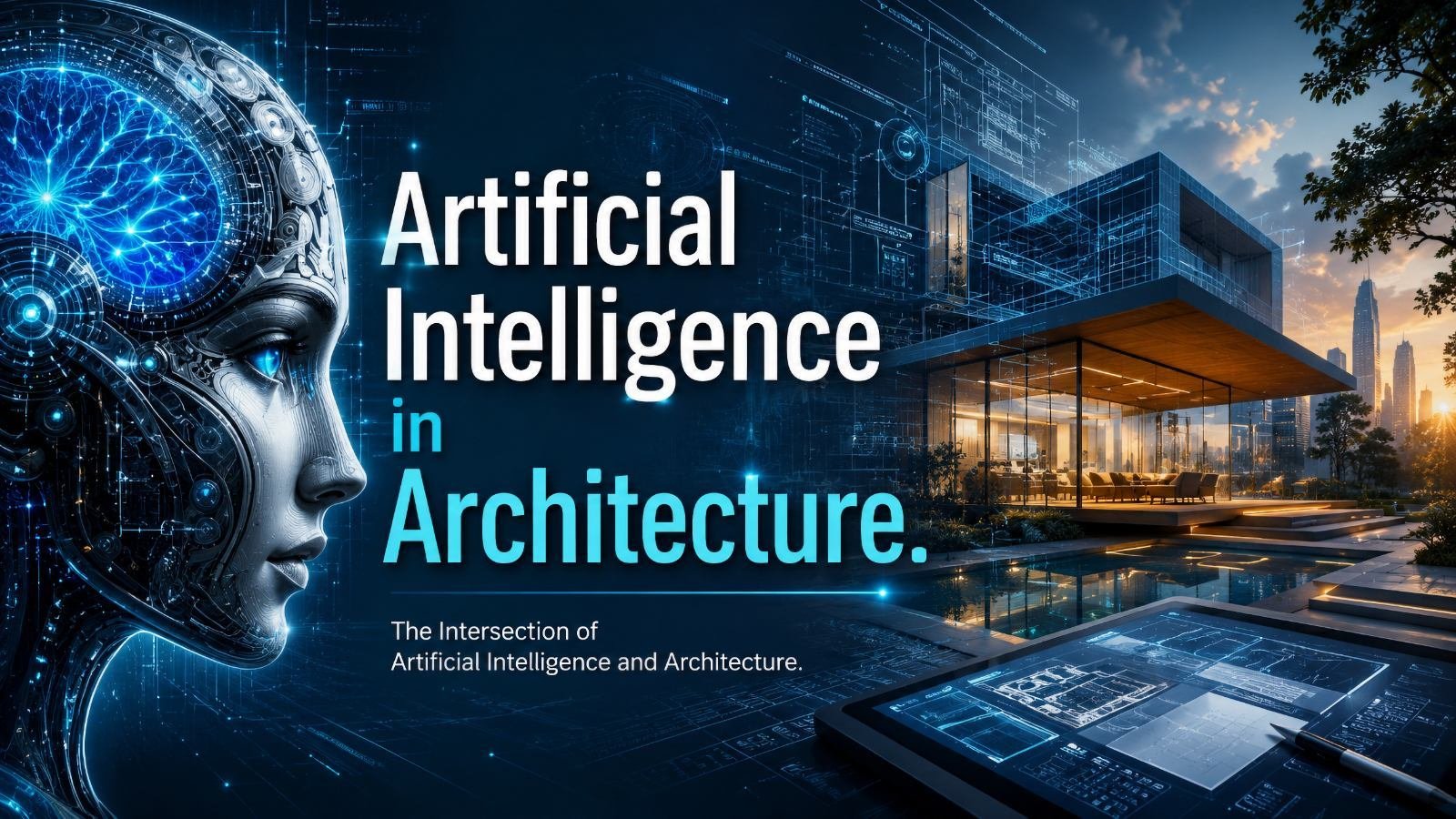
Artificial Intelligence (AI) is rapidly transforming various industries, and architecture is no exception. As architects and students poised to shape the built environment, it is imperative to understand how AI is influencing our profession. This article provides an introduction to the intersection of AI and architecture, exploring its applications, benefits, challenges, and future prospects.
The Convergence of AI and Architectural Practice
The integration of AI into architecture signifies a paradigm shift in how we approach design, planning, and construction. AI encompasses machines and software capable of performing tasks that traditionally require human intelligence, such as learning from data, recognizing patterns, and making informed decisions. In the context of architecture, AI offers tools that can enhance our capabilities, enabling more efficient and innovative solutions.
Understanding AI: A Foundation
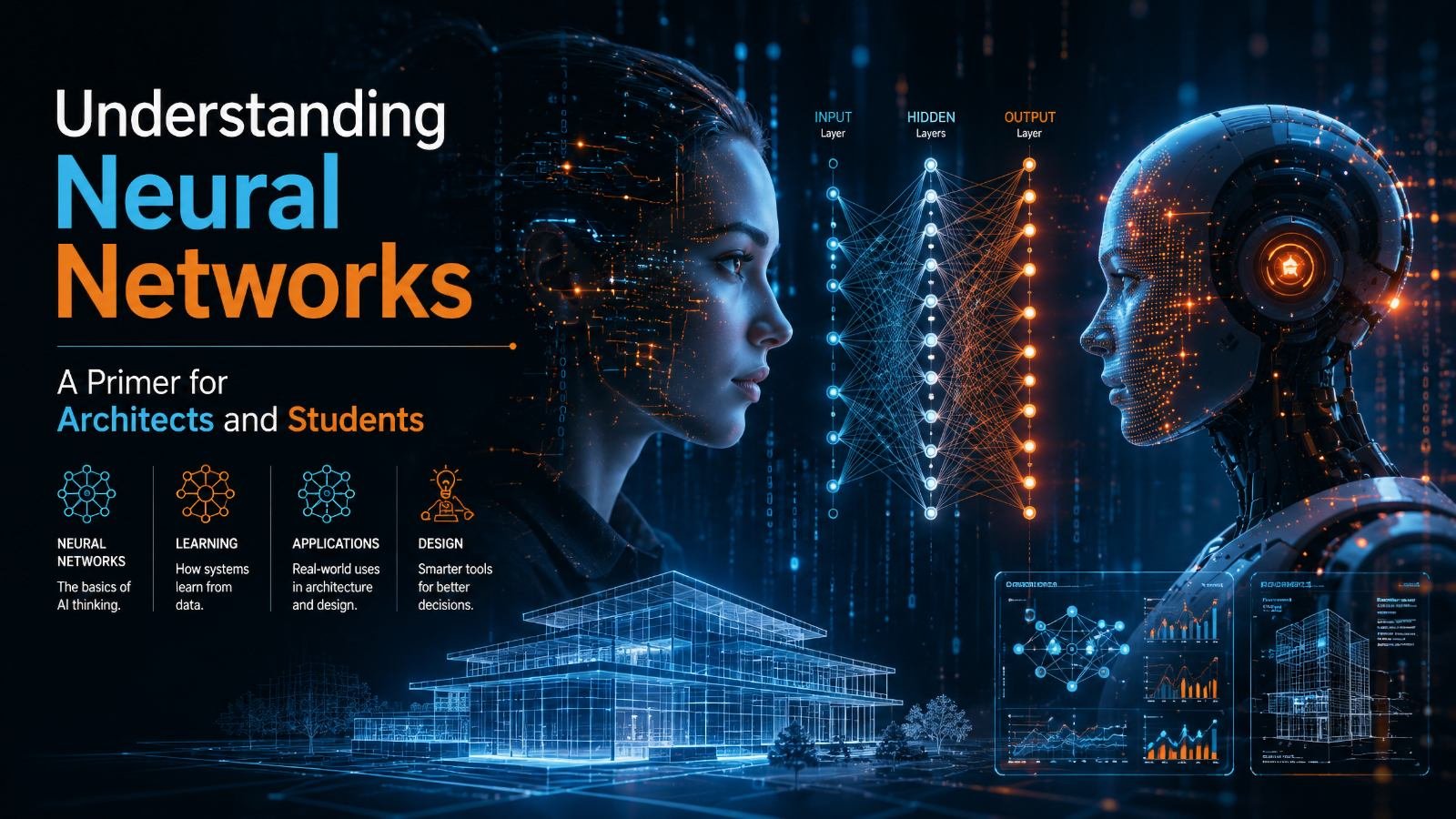
At its essence, AI involves the development of algorithms and models that allow computers to process information and perform tasks autonomously. Machine learning, a subset of AI, enables systems to improve their performance over time by learning from data. Deep learning, involving neural networks with multiple layers, allows for the recognition of complex patterns. These technologies form the backbone of AI applications in architecture.
Artificial Intelligence is not a replacement for architectural creativity.
It is a powerful tool that expands an architect's ability to analyze, design, and make better-informed decisions.
Applications of AI in Architecture
AI in Design and Planning
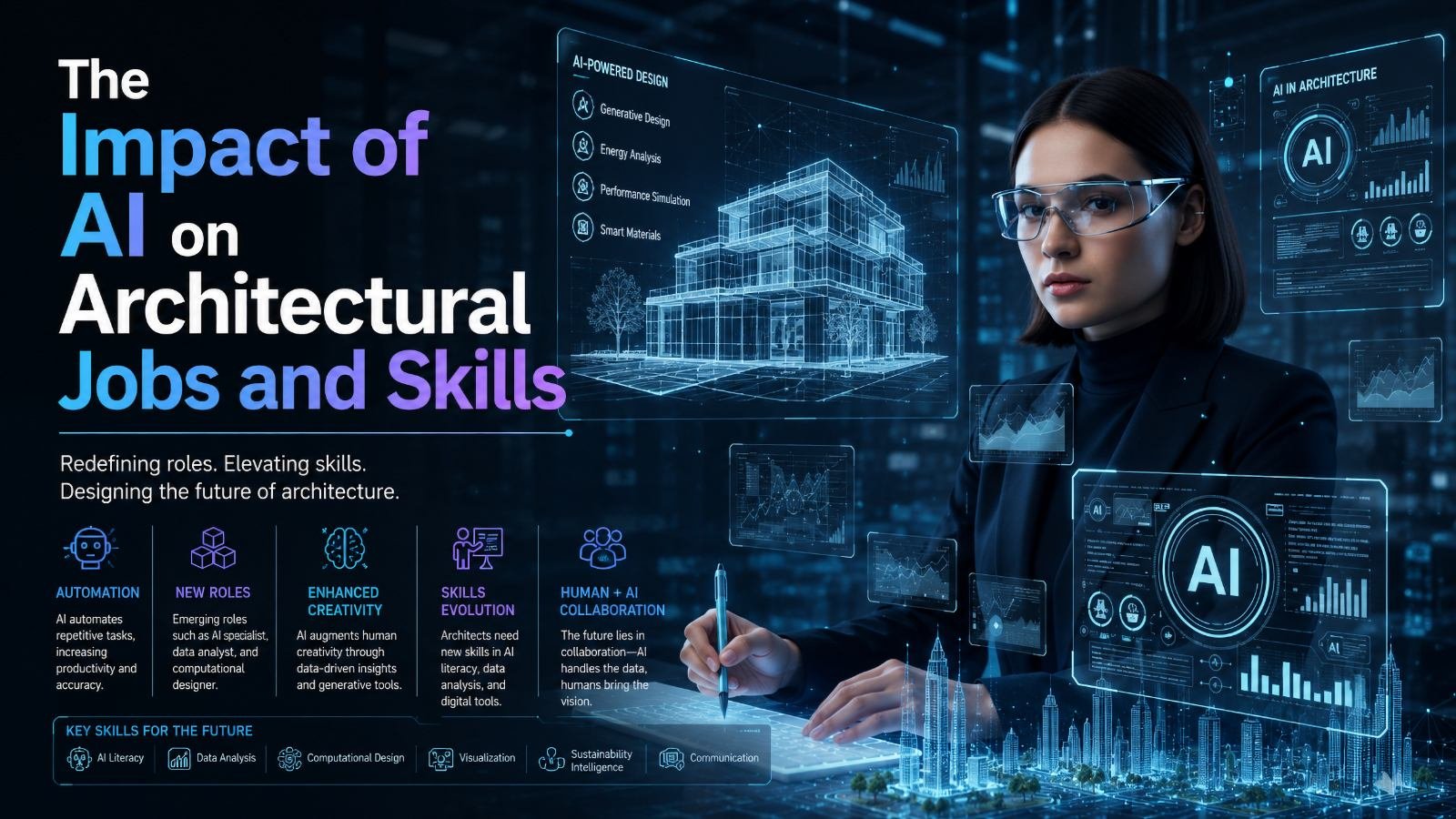
AI-powered software can significantly augment the design process. By inputting specific parameters such as site conditions, zoning regulations, material properties, and environmental factors, AI tools can generate multiple design options rapidly. This generative design approach allows architects to explore a broader spectrum of possibilities, optimizing for factors like structural integrity, aesthetics, sustainability, and cost-efficiency.
For instance, AI can analyze spatial relationships and suggest optimal layouts that maximize natural light and ventilation. It can also simulate how different design choices impact energy consumption, helping architects make data-driven decisions that enhance building performance.
AI in Construction and Project Management
In the construction phase, AI contributes to improved project management and execution. Predictive analytics can forecast potential delays by analyzing historical project data and real-time inputs, enabling managers to mitigate risks proactively. AI-driven scheduling tools can optimize resource allocation, ensuring projects stay on track and within budget.
Moreover, AI-equipped drones and robotics are increasingly used for site inspections, monitoring progress, and ensuring safety compliance. These technologies can perform repetitive or hazardous tasks, reducing the risk to human workers and improving overall efficiency.
AI in Building Performance and Sustainability
Sustainability is a critical consideration in contemporary architecture. AI facilitates the creation of smart buildings equipped with sensors that collect data on various parameters such as energy usage, temperature, occupancy, and air quality. AI systems analyze this data to optimize building operations in real-time, adjusting heating, cooling, and lighting systems to enhance comfort while minimizing energy consumption.
Additionally, AI can model and predict the long-term performance of buildings under different environmental conditions, assisting architects in designing structures that are resilient and adaptable to climate change.
Challenges and Ethical Considerations
Looking ahead, AI is poised to become an integral component of architectural practice. It is expected to handle routine and computational tasks, allowing architects to focus more on creativity, critical thinking, and human-centric design. The evolution of AI could lead to the development of responsive environments and adaptive structures that interact seamlessly with their occupants.
The potential for AI to contribute to the design of smart cities is significant. By integrating AI at the urban scale, architects and planners can develop cities that are more sustainable, efficient, and responsive to the needs of their inhabitants.
Recommendations for Architects and Students
To effectively embrace AI in architecture, consider the following steps:
- Continuous Learning: Stay informed about the latest AI technologies and tools relevant to architecture. Engage in professional development through courses, seminars, and workshops.
- Interdisciplinary Collaboration: Collaborate with experts in technology, data science, and engineering. Such partnerships can foster innovative solutions and broaden your perspective.
- Ethical Practice: Be mindful of the ethical implications of AI. Advocate for transparency, accountability, and fairness in the development and application of AI systems.
- Innovative Mindset: Leverage AI as a tool to enhance creativity. Use it to explore new design methodologies and push the boundaries of traditional architectural practice.
In Conclusion
The advent of AI in architecture presents both opportunities and challenges. By embracing this technology thoughtfully and responsibly, architects can enhance their practice, contribute to sustainable development, and better serve society. The future of architecture lies in our ability to adapt and innovate, integrating new tools that expand our capabilities and enrich the built environment.
References:
-
Kolarevic, B. (2003).
Architecture in the Digital Age: Design and Manufacturing.
Taylor & Francis.
Provides an excellent overview of how digital technologies—including early computational intelligence—have transformed architectural design and fabrication. -
Picon, A. (2010).
Digital Culture in Architecture: An Introduction for the Design
Professions.
Birkhäuser.
Explores how digital technologies are reshaping architectural thinking and professional practice. -
Menges, A., & Ahlquist, S. (Eds.). (2011).
Computational Design Thinking.
Wiley.
Examines computational methodologies that form the foundation for today's AI-assisted architectural workflows. -
Russell, S., & Norvig, P. (2016).
Artificial Intelligence: A Modern Approach (3rd ed.). Pearson
Education.
The definitive reference on artificial intelligence, covering machine learning, intelligent systems, and reasoning techniques applicable across many disciplines. -
Negroponte, N. (1970).
The Architecture Machine: Toward a More Human Environment.
MIT Press.
A pioneering work that anticipated intelligent computer-assisted architectural design decades before modern AI. -
Oxman, R. (2017).
"Thinking Difference: Theories and Models of Parametric Design Thinking."
Design Studies, 52, 4–39.
Discusses computational design thinking and the theoretical foundations of algorithmic and AI-assisted architecture. -
Burry, M. (2011).
Scripting Cultures: Architectural Design and Programming.
Wiley.
Demonstrates the growing importance of programming and computational thinking in contemporary architectural practice. -
Carpo, M. (2017).
The Second Digital Turn: Design Beyond Intelligence.
MIT Press.
Explores the transition from traditional digital design toward intelligent computational systems that increasingly resemble AI-assisted workflows. -
Leach, N. (Ed.). (2017).
Digital Fabrication: Architectural and Material Techniques.
Wiley.
Surveys digital fabrication technologies and their relationship to computational design and future construction methods. -
Schumacher, P. (2011).
The Autopoiesis of Architecture, Volume I: A New Framework for
Architecture.
Wiley.
Presents a theoretical framework for contemporary architecture, emphasizing computational design, parametricism, and emerging intelligent systems.